What does it take to build a strong digital foundation?
From signing up for social media to experimenting with online advertising, business owners are inundated with advice about what they “need” to establish or grow their online presence.
Those channels are useful, sure. But they’re not foundational.
A foundation is a framework. The rock where a digital house is built. Without careful planning, your structure or all of your marketing efforts fall apart.
Building a strong digital foundation is unavoidable if you want to succeed online. You already know that a sales funnel sits at the very core of a great marketing strategy, but what other components are needed?
Today, your digital foundation isn’t just about having the right systems… it’s about having systems that talk to each other, automate intelligently, and create a seamless experience from first click to move-in.
With AI and automation now shaping search behavior, follow-up speed, and personalization, your tech stack isn’t optional. It’s your competitive advantage.
Below, we’ll break down must-have systems for a smart digital foundation.
Professional Website
With technology as prevalent as it is in our daily lives, it’s hard to imagine that any small business could go without a company site. Even so, according to small business lender, Fundera, only 64% of small businesses have one.
Think of your digital foundation as a funnel…
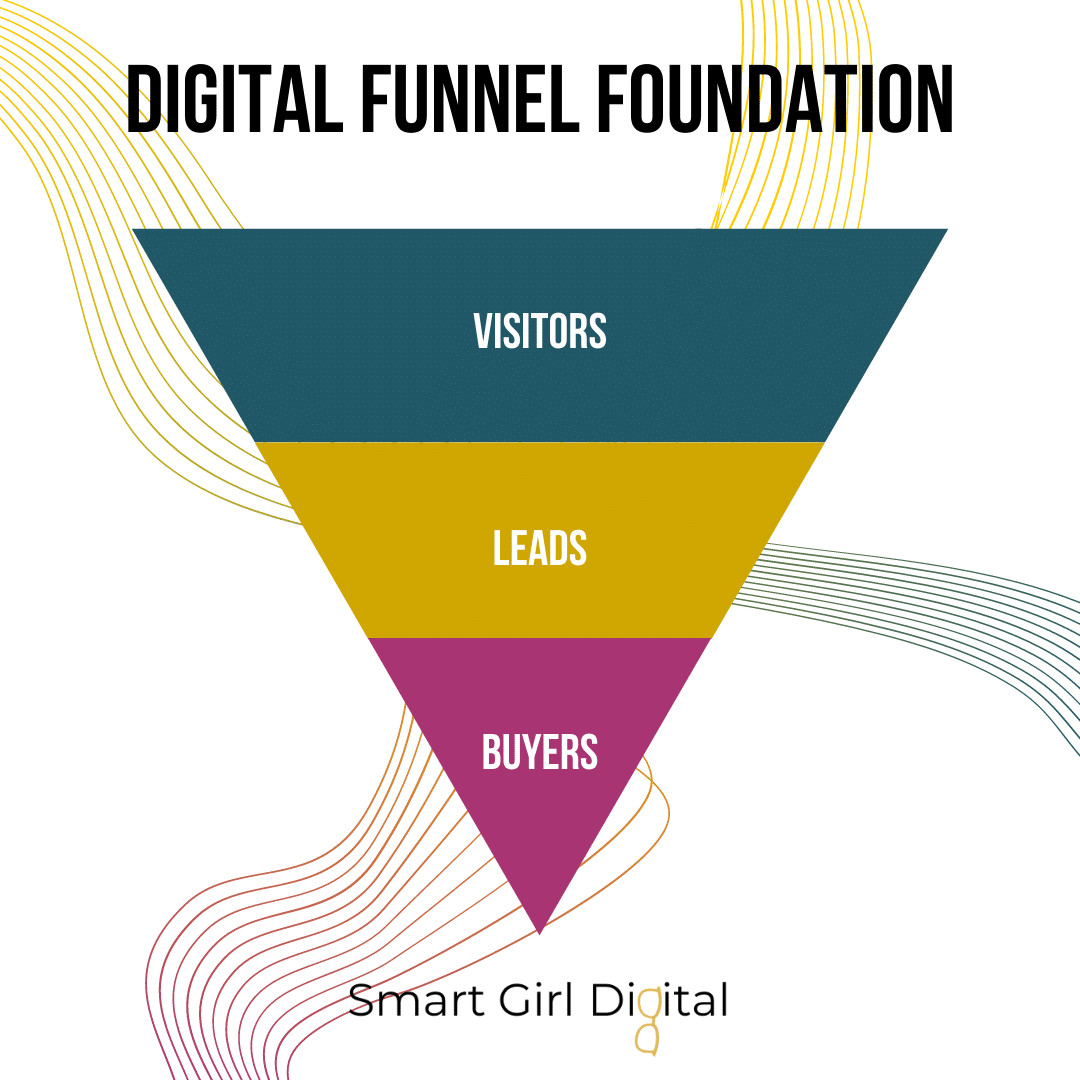
Creating & maintaining a business website is located towards the top of the funnel. A good company website:
- Generates organic traffic through SEO optimization.
- Establishes authority with blog content, infographics, and videos.
- Communicates offers/services by providing clear CTAs.
Your business website is your hub
A company website is a digital storefront of sorts designed specifically to entice visitors and introduce them to your brand. It can only do that, though, if it’s been optimized. Here are a few elements of a great website…
- Delightful Design: Regardless of how well optimized a website is, if it’s not visually pleasing, and more importantly, in line with the brand it represents, it’ll fall flat for prospective customers.
- Informative Content: Website content should be relevant, timely, and, above all, add value to anyone visiting a site.
- The homepage should clearly state what a business is and does, right off the bat.
- The about page expands on these points & humanizes the staff behind the brand.
- The service or product pages on the website should be well-outlined & easy to navigate.
- And the blog, of course, needs to establish the business as a leader in its respective industry.
- SEO Optimized: Don’t neglect the tech! Brand websites should be optimized for SEO by crafting keyword-rich content for on-page SEO & prioritizing mobile responsiveness & site speed. The work behind the scenes is just as important as UX design.
- Strong Calls to Action: Adding a few well-placed CTAs can guide visitors browsing your website to any desired action you choose. These actions can be anything from newsletter signups to social follows, but ultimately, they should lead towards well…leads.
Recommended Website Stack:
- WordPress
- Webflow
- HubSpot CMS
- Elementor
- Webflow Designer
- Google Tag Manager
- Google Analytics
- Hotjar
- Microsoft Clarity
Modern websites should include AI-powered chat, smart routing, and personalization. Tools like Drift, Intercom, or AI chat integrations can qualify leads instantly and reduce response time, which is critical in senior living where speed-to-lead directly impacts conversion.
Email Automation
Automated emails can boost revenue by as much as 320%. Campaign Monitor
After optimizing your website for visitors, you need a way to capture them & turn them into leads. That’s where email automation comes in.
Email automation, not to be confused with standard email marketing, is a system designed to reach subscribers with the right message, at the right time. The benefits of automation are endless. With the right email workflows, a business can:
- Offer value in line with subscriber needs.
- Nurture relationships with prospective customers.
- Promote your products or services to warm leads.
- And most importantly, improve customer retention rates.
After all, you can see 60-70% more conversion success selling to an existing customer as opposed to 5-20% success selling to a new one.
AI now allows you to dynamically personalize nurture campaigns based on behavior. Email timing, content, and messaging can adapt in real time based on engagement, helping you move prospects through the funnel faster without increasing workload.
Recommended Marketing Automation Platforms:
- ActiveDEMAND (deep integrations + proven nurture frameworks in senior living)
- HubSpot Marketing Hub
- Marketo (enterprise)
- Mailchimp (entry-level, but limited for complex funnels)
For an example of an email sequence, take a look at our blog, 5 Secrets to Building Your Sales Funnel Foundation. In it, we outline a welcome workflow created to push prospects further down your funnel.
Without automation, your leads go cold during the long senior living decision cycle. A strategic nurture system ensures every inquiry is followed up with consistent, relevant communication over time.
Remember, email automation should complement current marketing efforts, not work against them. That’s why it’s important to start with the website first. Once you get clarity on your brand & its messaging, crafting sales content around it becomes much easier.
Sales CRM Processes
Speaking of sales…the final piece of the puzzle is a sales CRM.
A CRM (customer relationship management) system is a software or program that allows a business to manage any and all interactions with its customers.
Today’s CRM should do more than store contacts. It should predict next steps, trigger follow-up tasks, and score leads automatically. AI-powered lead scoring and pipeline insights help sales teams prioritize the right prospects faster, improving tour-to-move-in rates.
Generating traffic to a website and capturing leads can prove futile if there’s no way to maintain those relationships. With the right system, your entire sales process can be streamlined.
We talk a lot about sales & marketing alignment, and that’s not possible with a solid CRM in place. Ask yourself:
- What does your pipeline of new business look like?
- How are customers and prospective customers interacting with your content?
- Who manages communication with customers? And how frequently?
All those questions are answered with a sales CRM.
Recommended CRM Platforms:
- HubSpot CRM (strong marketing + sales alignment)
- Salesforce (enterprise operators)
- ActiveDEMAND (strong in senior living automation ecosystems)
- Zoho CRM (budget-friendly option)
Lead Generation / Funnel System
Your lead generation system should do more than capture information. It should guide prospects through a clear, intentional journey from curiosity to conversion. High-performing funnels today combine optimized landing pages, frictionless forms, and seamless scheduling tools to remove barriers and increase inquiry volume. Platforms like ClickFunnels, HubSpot Landing Pages, Unbounce, and Typeform make it easier to build conversion-focused experiences, while tools like Calendly simplify tour booking and reduce drop-off. The most effective funnels are not static. They are continuously tested, refined, and aligned with how prospects actually search and engage.
Recommended Funnel + Conversion Tools:
- ClickFunnels / GoHighLevel (funnel builders)
- HubSpot Landing Pages
- Unbounce (conversion optimization)
- Typeform (high-converting forms)
- Calendly (frictionless booking)
AI-powered funnel tools can now dynamically adjust messaging, layouts, and calls-to-action based on user behavior, traffic source, or demographics. This means your website experience becomes more personalized in real time, increasing conversion rates without requiring constant manual optimization.
Reporting & Analytics System
A strong reporting and analytics system ensures you are not just collecting data, but actually using it to drive smarter decisions. Your digital foundation should include tools like Google Analytics 4, Looker Studio, HubSpot reporting, and CallRail to provide visibility into traffic, lead sources, campaign performance, and call tracking. Behavioral tools like Microsoft Clarity and Hotjar add another layer, helping you understand how users interact with your website and where they drop off.
The goal is to create a single source of truth that connects marketing efforts directly to outcomes like tours, move-ins, and occupancy growth. Without this clarity, it becomes nearly impossible to identify what is working and where to optimize.
Recommended Analytics Stack:
- Google Analytics 4
- Looker Studio (dashboarding)
- HubSpot Reporting
- CallRail (call tracking for senior living)
- Microsoft Clarity (UX insights)
AI-enhanced analytics platforms can now surface insights automatically, identifying trends, anomalies, and opportunities without manual deep dives. Instead of spending hours pulling reports, your team can focus on acting on insights that improve conversion rates and overall performance.
AI + Automation System
The newest layer of a smart digital foundation is AI and automation, which transforms how your systems operate and scale. This is where efficiency meets personalization. Tools like ChatGPT, Jasper, and Notion AI support faster content creation and internal workflows, while platforms like Zapier, Make, and Airtable connect your systems and automate repetitive tasks behind the scenes.
For senior living organizations, this means faster follow-up, more consistent communication, and less manual work for already stretched teams. AI can help generate personalized email responses, summarize call notes directly into your CRM, trigger nurture campaigns based on behavior, and even assist with reporting and content production.
Core AI Tools to Consider:
- ChatGPT / Claude (content + strategy support)
- Jasper (AI copywriting workflows)
- Zapier / Make (automation between systems)
- Airtable (AI-enabled data + workflows)
- Notion AI (internal ops + knowledge base)
Use Cases for Senior Living:
- Auto-generating follow-up emails after inquiries
- Summarizing call notes into CRM records
- Creating personalized nurture sequences at scale
- Automating reporting summaries for leadership
- Speeding up content creation for blogs + ads
AI doesn’t replace your strategy. It amplifies execution, reduces manual work, and increases consistency across your systems.
When implemented correctly, it allows your team to move faster, respond quicker, and create a more seamless experience for prospects, all while maintaining the human touch that is critical in the decision-making process.
Beware of Shiny Object Syndrome
 Marketoonist
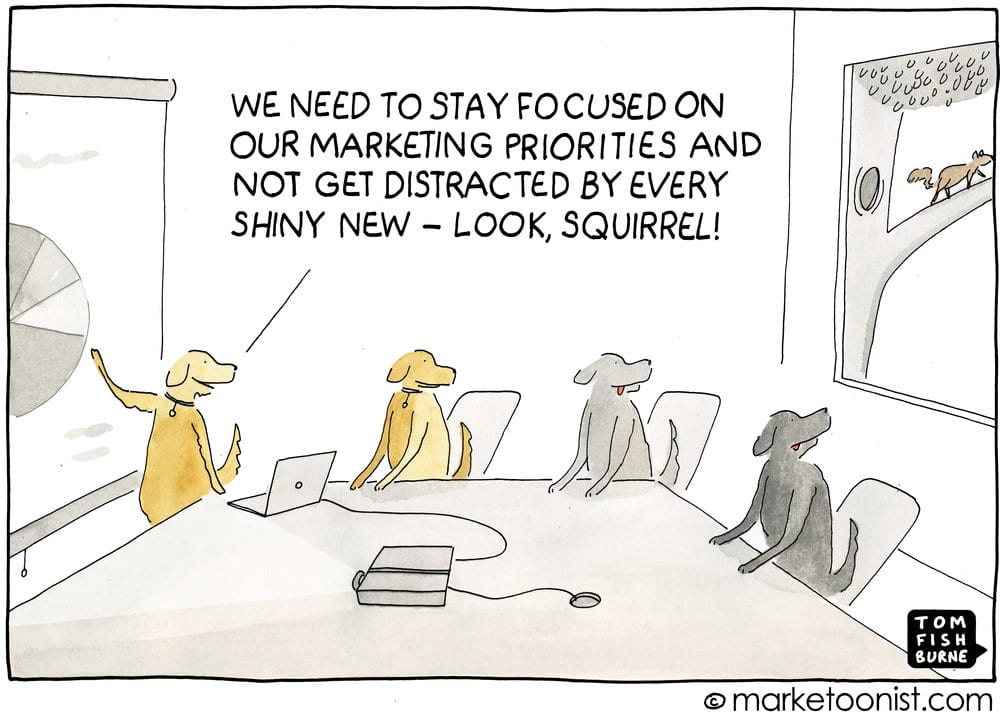
There’s something you need to look out for as you begin to build your foundation: shiny object syndrome.
Shiny Object Syndrome is a disease of distraction. Essentially, it’s chasing after the many new marketing trends and trying to implement them before a foundation is in place.
Social media, paid advertising, text marketing, and chatbots are all examples of “shiny objects” that, although useful in and of themselves, don’t mean much without a strong foundation behind them.
Imagine going viral on social media without a website to steer new followers to. Think about crafting a funnel & investing in advertising without a sales CRM in place. Even if you managed to attract prospects, if there’s no foundation, nurturing & closing leads will be next to impossible.
Once your foundation is solid, you can begin to build on what you already have.
Build Your Foundation with Smart Girl
A smart digital foundation is no longer just about having systems.
It’s about having the right systems, connected the right way, powered by automation, and enhanced with AI.
When your ecosystem is built correctly, you don’t just generate leads. You create a predictable, scalable pipeline that drives occupancy, improves conversion rates, and gives your team full visibility into what’s working.
Want help auditing your current systems and identifying gaps in your digital foundation? Book a Digital Discovery Call and we’ll map out exactly where your tech stack needs to evolve.