
Senior Living Digital Marketing in 2026: How to Build a Strategy That Drives Qualified Inquiries, Tours, and Move-Ins
Senior living digital marketing feels louder, more complex, and faster than ever before.
Between evolving search behaviors, AI tools entering every part of the funnel, and the intense pressure to hit occupancy goals, many senior living marketers feel buried under noise and low-quality leads.
What if the problem is not more effort or more channels but a lack of strategy that aligns marketing with actual decision behavior in the senior living consumer journey?
This article takes the strategy-first approach we shared in our most recent Executive Briefing and expands it into a full roadmap for senior living teams in 2026.
We will cover:
- The Cost and Conversion Challenge for Senior Living Marketing
- Why Senior Living Digital Marketing Feels Hard
- Why Traditional Funnels Fail Senior Living
- What Strong Digital Strategy Looks Like in Senior Living
- Introducing the EDGE Framework for Senior Living Growth
- Driving Engaging Qualified Traffic
- Designing Compelling Offers That Capture Interest
- Generating Ongoing Engagement That Supports the Sales Process
- Aligning All Parts of the Marketing Ecosystem
- Real Examples: Applying Strategy to Performance
- How to Apply This Strategy in the Next 90 Days
- The Future of Senior Living Digital Marketing
- From Chaos to Clarity: Final Takeaways & One Power Hour Solution
You will get meaningful context, real statistics you can cite internally, and practical takeaways that reduce chaos and increase clarity, quality, and conversion.
The Senior Living Marketing Reality Today
Senior living is not another category that wins by reaching eyeballs alone. It is a long, high-consideration decision that typically includes multiple decision makers, emotional priorities, offline touchpoints, and a heavy reliance on relationships.
Understanding the real dynamics of this process is critical for creating digital marketing that actually performs.
Here are a few key industry benchmarks that illustrate what most communities are facing right now:
The Cost and Conversion Challenge
According to Invoca, here are a few fast facts about the cost and conversion challenge facing senior living marketers:
- Senior living leads can cost upwards of $400 each, even before they convert to tours or move-ins. These costs are significantly higher than many other industries such as business services ($229) and home improvement ($85).
- It often takes about 25 touches across channels to convert a senior living prospect, due to the emotional complexity of the decision and the involvement of family caregivers.
Waypoint shared that the average conversion rates for senior living web leads hover around 23 to 30 percent, depending on how conversion is defined (lead to tour, or lead to inquiry).
Additionally, the length of the customer journey in senior living plays a role in the overall marketing strategy. Creating a dynamic and cohesive experience impacts conversion rates.
- The sales cycle for prospective residents often ranges from 70 days (assisted living) to 120 days (independent living), making nurturing and engagement essential.
- A significant portion of tours come from inbound phone calls, and 70 percent of senior living consumers will call during their research journey, meaning digital channels must support offline conversion.
- If your tactics are not tied to reducing lead costs, improving conversion rates, increasing offline engagement, and shortening sales cycles, your marketing is probably not optimized for how your audience actually buys.
Why Senior Living Digital Marketing Feels Hard
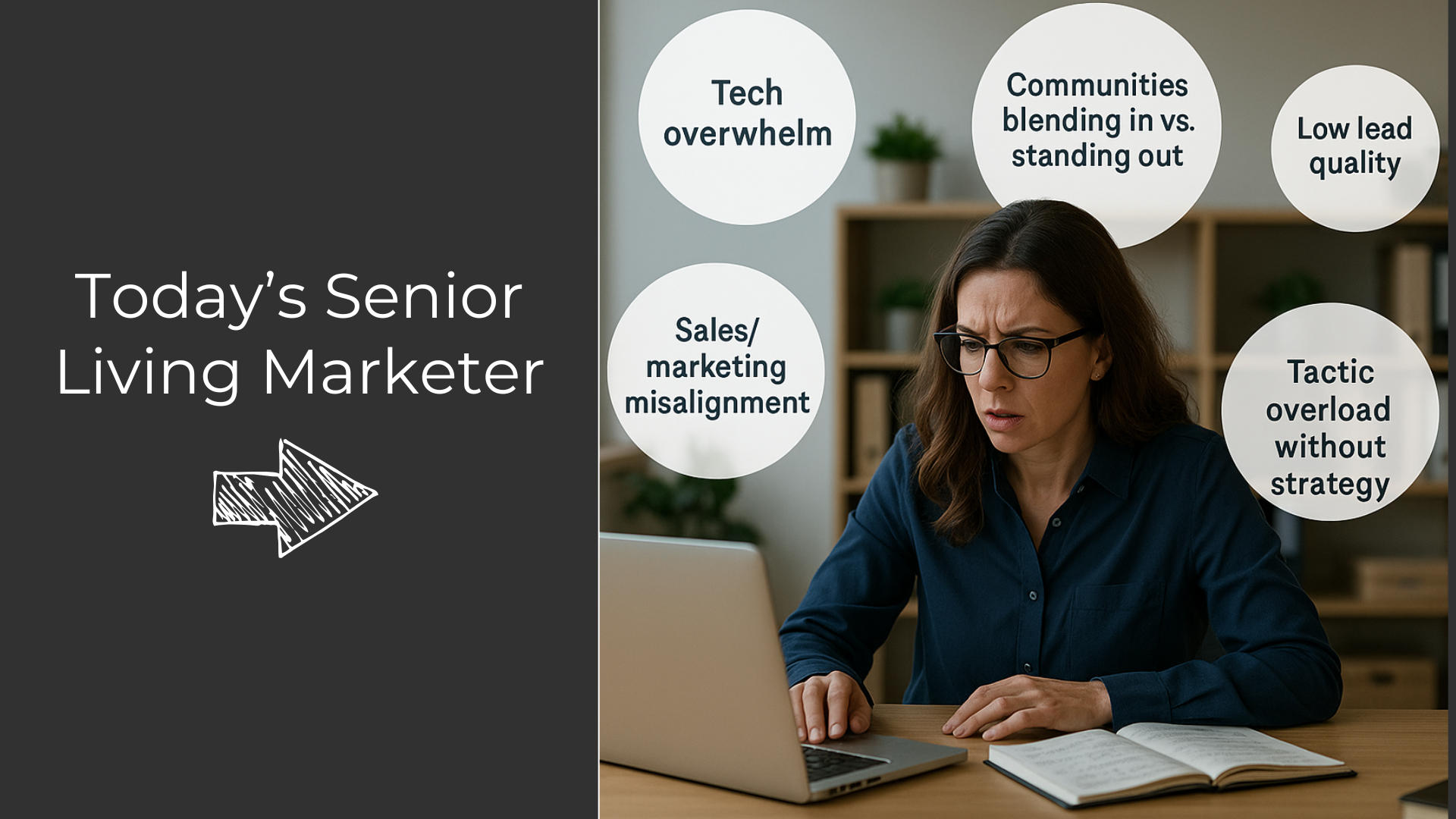
Senior living marketers are not short on effort. They are short on clarity and strategy. You might see this in situations like:
- Shifting budgets between channels with no clear reason
- Adding new AI tools without defined outcomes
- Managing social, search, email, and referral programs as separate silos
- Feeling like more traffic will fix lead quality
All of this looks active, but most of it is not strategic.
Here are the top three reasons senior living marketing feels so chaotic:



Why Traditional Funnels Fail Senior Living
In traditional marketing, the funnel assumes people move predictably from awareness to purchase. But senior living decisions are more complex:
- There are multiple decision influencers (seniors, adult children, caregivers)
- Online discovery blends with offline conversations
- Families may revisit research months later
A funnel model treats touchpoints as a straight line. What senior living needs is an ecosystem where engagement loops are continuous, experiences are personalized, and nurture spans months.
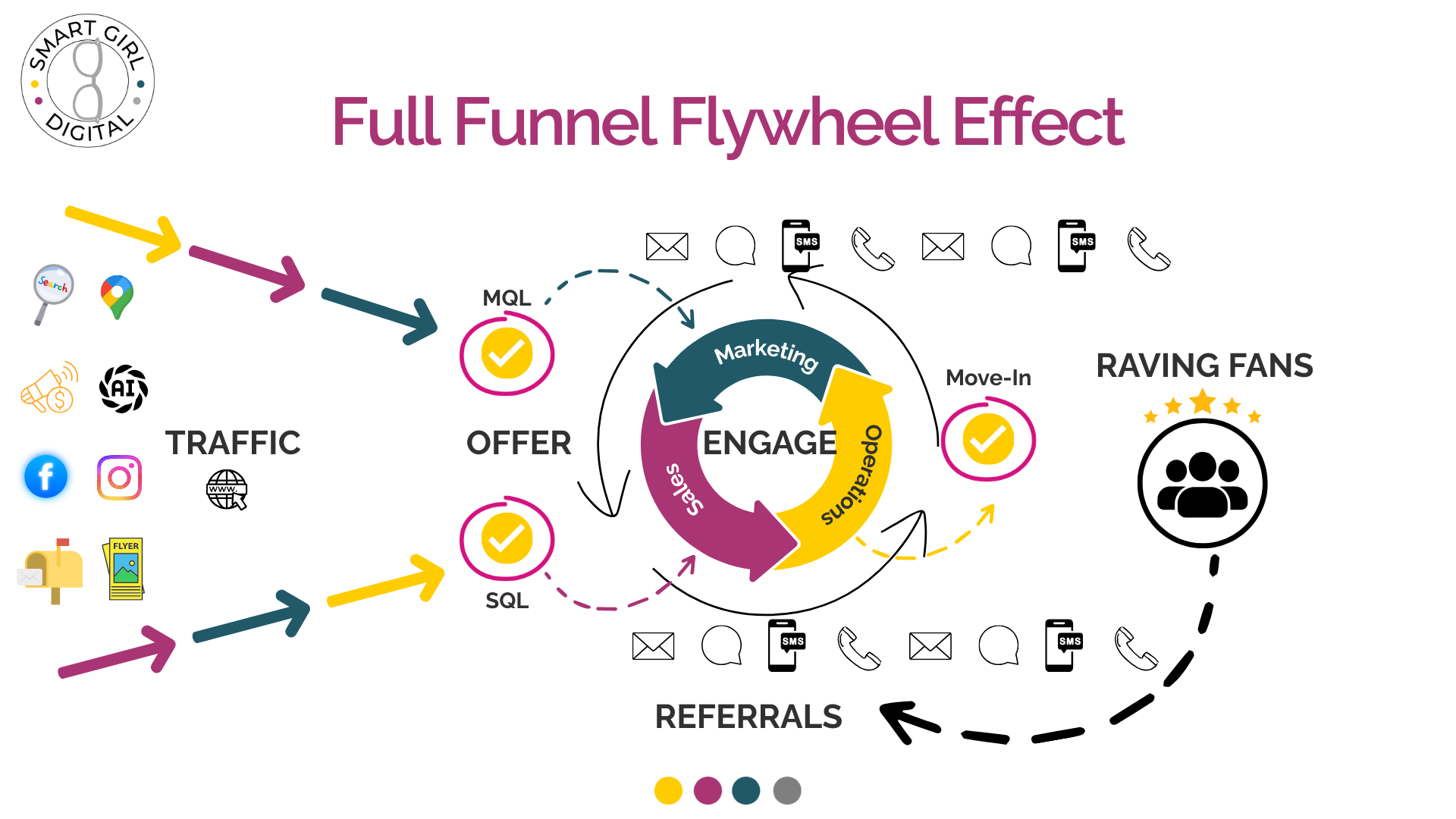
This is where a strategy that is audience-centered, data-informed, and structured across channels outperforms disconnected tactics.
What Strong Digital Strategy Looks Like in Senior Living
Before launching another ad campaign or experimenting with the latest AI trend, check your foundation. A strong senior living digital marketing strategy includes:
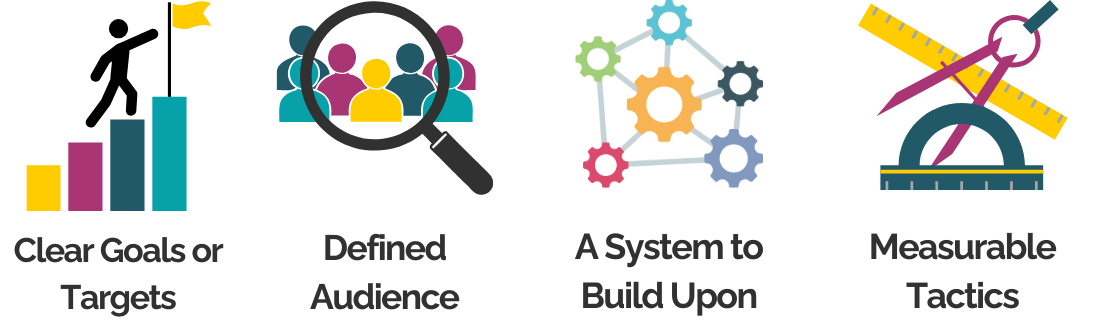
Clear business objectives tied to occupancy goals rather than vanity metrics like clicks or impressions.
Defined and segmented audiences, including adult children, seniors, referral partners, and influencers.
Systems that talk to each other (CRM, email, analytics) to track true outcomes like tour requests and move-ins.
Measurable tactics linked to business outcomes, not just engagement.
When these elements are missing, implementation feels disjointed and expensive.
Introducing the EDGE Framework for Senior Living Growth
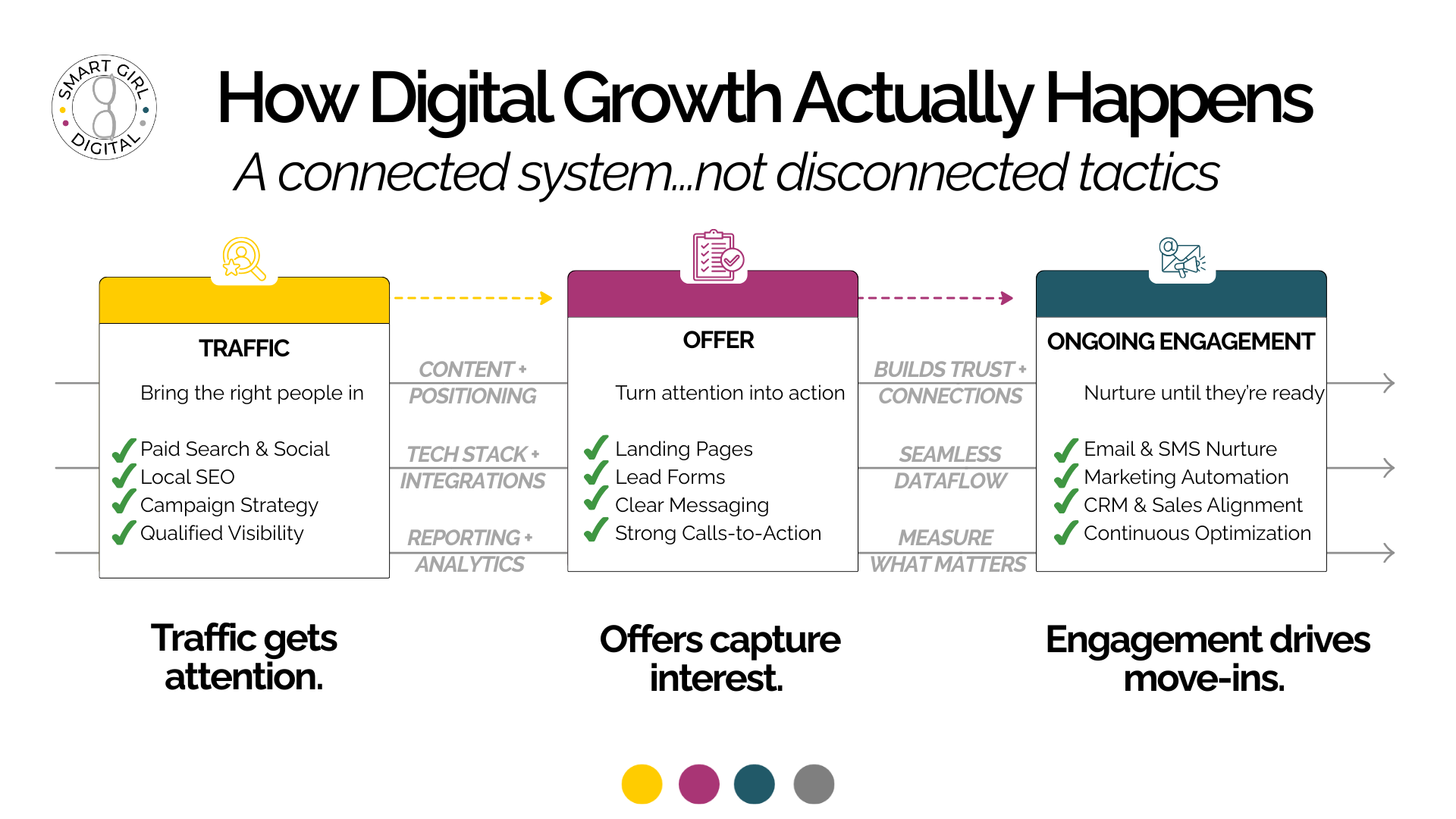
At Smart Girl Digital, we organize digital marketing into a simple but powerful ecosystem we call EDGE – the Empowered Digital Growth Ecosystem!
- Engaging Qualified Traffic
- Designed Compelling Offers
- Generated Ongoing Engagement
- Ecosystem Alignment
This approach helps communities reduce complexity and focus on what moves results, not just metrics.
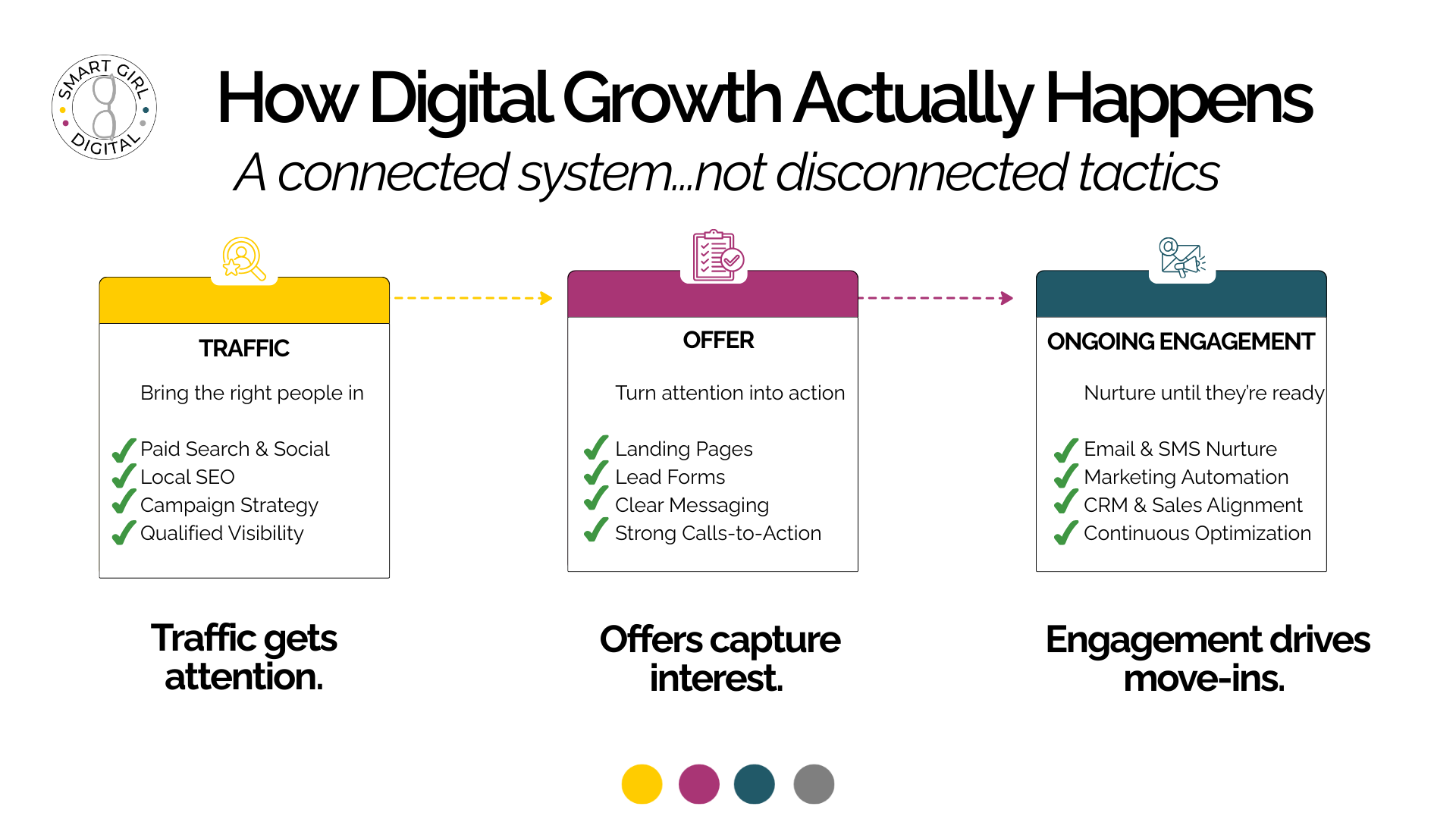
Let’s break each part down with a mix of strategy, examples, and what it means for your senior living community.
Part 1: Driving Engaging Qualified Traffic
Getting people to your website and content is important, but qualified traffic is what drives outcomes.
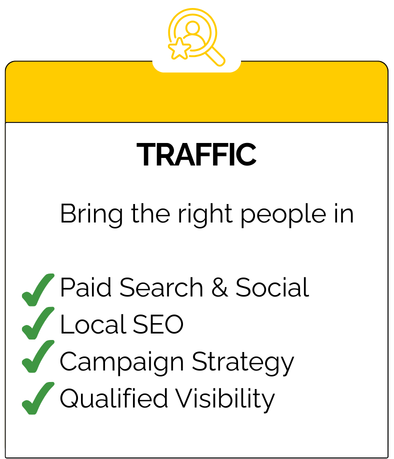
Finding your audience online.
Showing up where they spend their time.
Tactically focused efforts
- Search engines
- Social media
- Forums
- Inbox/Email

In 2025, data showed that organic search was cited as the top ROI-driving channel for many marketers, with websites and blogs often outperforming paid channels.
To drive qualified traffic for senior living:
- Optimize for local search terms families actually use (community + care type, proximity queries, caregiver resources, etc.).
- Build content that answers questions at every stage (from early research to final decision).
- Use paid campaigns only when you have a strong offer and segmentation clarity.
Qualified traffic focuses on intention, not just volume.
Part 2: Designing Compelling Offers That Capture Interest
An offer is any moment you ask for a prospect’s attention or contact information. But in senior living, not all offers convert equally.
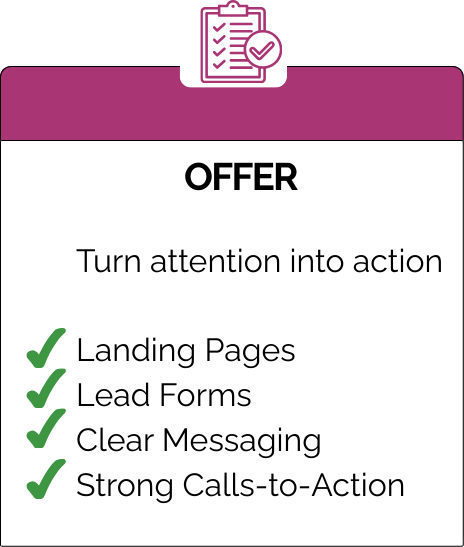
So what…who cares?
Something your audience wants or is actively looking for.
A clear value proposition… they cannot resist.
Okay… Now What?
A clear call to action.
Compelling offers for senior living might include:
- Community tours
- Educational guides on care options
- Cost comparison guides
- Financial planning PDFs for families
Generic “contact us” forms have very poor conversion rates in senior living, sometimes as low as 1 to 3 percent.
Instead, effective offers specifically address what your audience is trying to learn or solve. For example:
- “Download the Senior Living Cost Comparison Guide for Your Area”
- “Schedule a Virtual Q&A With Our Community Director”
- “Get Your Personalized Memory Care Pathway Plan”
These contextual offers help families see value before asking them to commit to a tour.
Part 3: Generating Ongoing Engagement
Engagement is not a one-off email or ad. It is the ongoing communication plan that moves families through a long decision journey.
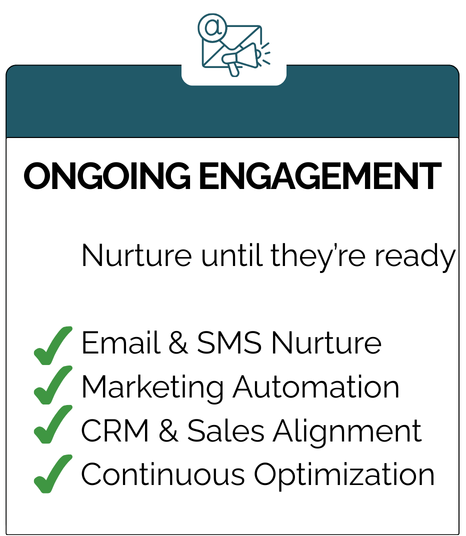
After your audience has taken the desired action on your offer…
What are the key communication touchpoints?
More than just a one or two-step process.
How is your marketing ecosystem supporting your entire sales process?

Due to the length and emotional nature of senior living decisions, a strong nurture strategy is essential. Without nurture, even qualified traffic and compelling offers will stall before conversion.
Effective engagement strategies include:
- Email and text sequences tailored to persona and stage
- Personalized follow-up after tours
- Educational content that builds trust and addresses key questions
Consider this stat: 70 percent of senior living and care consumers will call during their research journey, and inbound calls are often among the most valuable conversions.
Your engagement strategy needs to support both digital and offline touchpoints.
Aligning All Parts of the Marketing Ecosystem
EDGE works because it reduces disconnects. Leads travel from awareness through engagement without getting dropped between channels or departments.
For example:
- A family finds your content through search
- They request a guide
- They receive nurture emails tailored to their interest
- A tour is booked via phone or text
- Follow-up further personalizes resources
This alignment increases conversions and improves the overall experience.
Real Examples: Applying Strategy to Performance
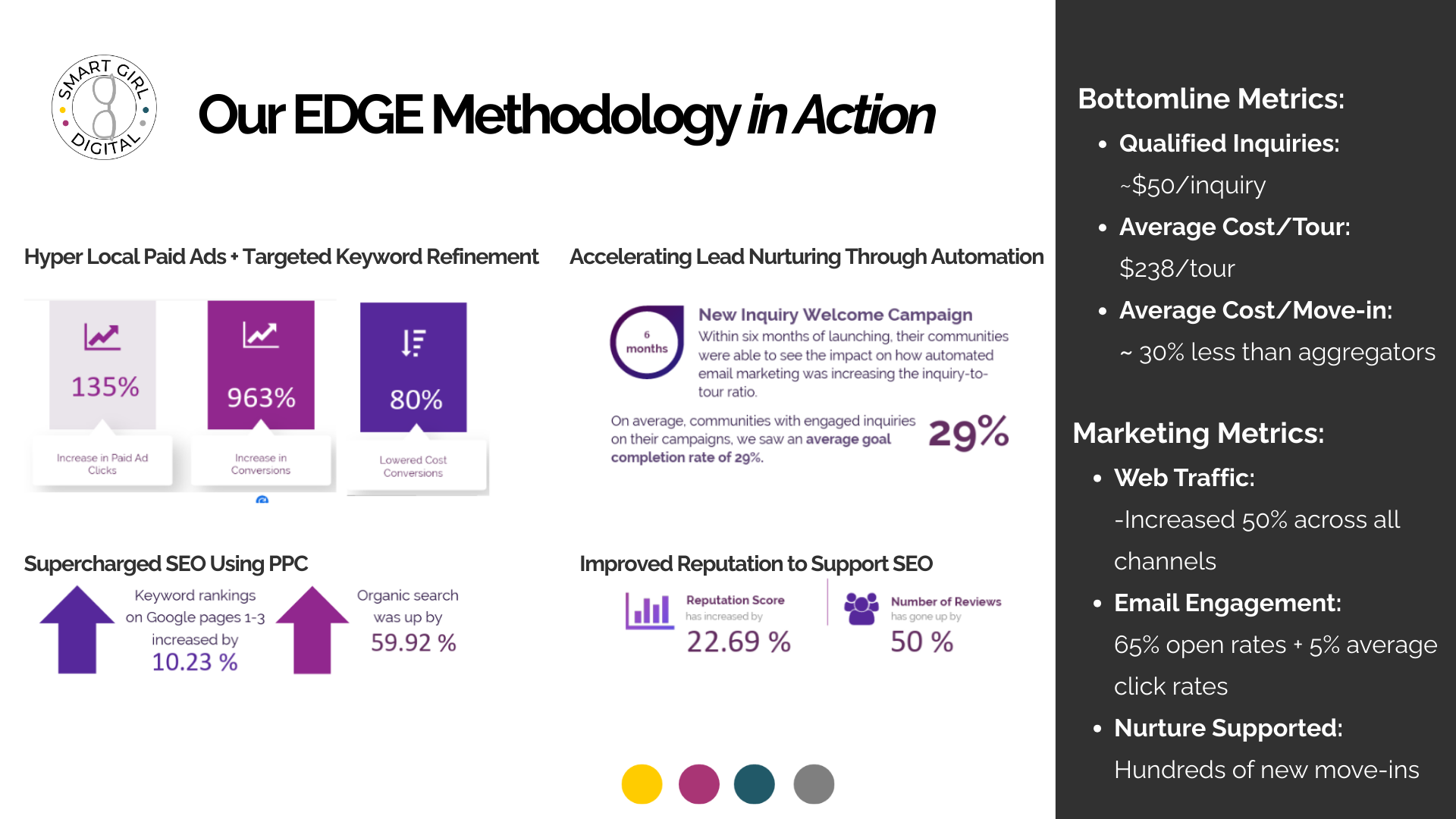
Here are common performance outcomes when communities move from disconnected tactics to a strategy like EDGE:
Improved Lead Quality
Instead of generating hundreds of low-quality form fills, communities see an increase in calls and booking requests that are connected to engaged audiences.
Shorter Sales Cycles
Because prospects receive relevant content and nurturing, they make decisions with more confidence and faster than uninformed leads.
Lower Cost per Inquiry
When traffic is qualified and offers are compelling, overall cost per inquiry decreases even if budgets remain stable.
How to Apply This Strategy in the Next 90 Days
You can implement meaningful change without a full marketing overhaul. Here is a practical 90-day plan:
Days 1–30: Clarify Strategy
- Define your primary audiences
- Set clear business outcomes (e.g., tours per week)
- Audit current channels for performance and alignment
Days 31–60: Build Offers and Content
- Design tailored offers for each audience segment
- Create or refine content that supports those offers
- Map nurture sequences to buyer stages
Days 61–90: Launch, Measure, Iterate
- Launch campaigns with clear measurement plans
- Track offline conversions and attribution
- Adjust based on audience response metrics
This incremental approach makes the strategy manageable and measurable.
The Future of Senior Living Marketing
Digital marketing will continue evolving. AI tools are already becoming integrated into search and content personalization workflows, and over 90 percent of marketers plan to use SEO optimization for both traditional and AI-powered search engines by 2026.
But even as technology changes, the core principles remain the same:
- Understand your audience
- Align strategy to real decision behaviors
- Build systems that support long-term engagement
Senior living marketing is about relationships and trust. The digital environment should support and enhance those elements, not distract or fragment them.
Conclusion: From Chaos to Clarity
Senior living digital marketing does not have to feel chaotic. When you replace busy tactics with a thoughtful strategy, your results become more predictable, measurable, and aligned with occupancy goals.
Focus on:
- Qualified traffic
- Offers that convert
- Engagement that nurtures
Strategy first. Tactics second.
That is how senior living communities will thrive in 2026 and beyond.
If you would like help turning this strategy into an implementation plan, performance dashboard, or lead attribution system, let’s chat.
Power Hour Strategy Session
Power Hour is a focused, one-hour strategy session designed to help senior living communities uncover what’s holding them back, prioritize what actually matters, and walk away with a clear, actionable 90-day roadmap.